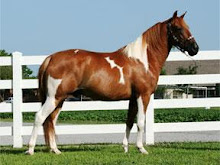
Chiari Update, and Sherry Lesson
These past few weeks have been pure torture. Headaches and nausea every day, stomach cramps almost every night, and my back pain has been on-and-off. My neck is the worst; the ache is so bad I would very much like to lop off my own head. 

This coming Tuesday is my first appointment with a Chiari specialist. I'm not sure what to expect. Honestly, I almost think he's going to just say "suck it up." Either that, or he'll recommend surgery. To be honest, I just don't want to go through that again. The first time around was bad, but this time I have too much responsibility to take off two months from work. 

Bleu has moved out to my place, and having someone else take care of him gives me heart palpitations. I feel responsible for my horses, and I can't stand hiring someone else to do the work. Charlie and Grimsey are very delicate, and I can't imagine what would happen if one of them got sick while under my dad's (or a temp's) supervision. Last time, I boarded Grimsey. Charlie will be more difficult thanks to his distaste for dogs. 

I had Velocity put down last month. The poor old man's time had come, and I'm glad I did it when I did. I think I should have done it earlier, but when you've got people arguing with you over it (Rachel, "Are you sure?") it makes it difficult to get done what needs to be done. He was buried at Flint Creek, where he fox hunted for years. I think it's a good resting place for him. I miss him, but I'm glad he's not in pain anymore. 

Yesterday was my monthly lesson with Miss Sherry. It was one of the most frustrating lessons I've had in a long time. Grimsey was good up until our right lead canter, and then we had some serious miscommunication regarding the canter depart uphill, on a circle. He dropped his outside shoulder, turned his head in, and just busted through my outside aids *sigh*

So then we spent the next 20 minutes at the walk and trot, working on counterbending. It really showed me how crooked I am, but also how his weaknesses reflect my weaknesses. It's not the first time we've had trouble working that 20m circle to the right. 

Ahh, well. What can you do? Until next time.
B J's Party Dice
I've always had bad luck with horses. First, it was Friday, who developed navicular just in time to be cleared for riding after his EPM treatment. Then, there was Cash, whose head-shaking had us all flummoxed for a full year-and-a-half. Next, was Rooster, who struck her head and had multiple seizures. Then Grimsey, whose feet I have struggled with since day one, when an abscess blew out the entire hoof wall on his left hoof, and subsequently sidelined him for a full year. Finally, there is Charlie. Good ol' Charlie, whom I "rescued" two weeks ago from a neglectful home (although, I don't think the owner was willfully neglectful). Charlie has been off since day one. The day I went to see him, he was too weak to trot for me, so I took him on blind faith (mixed with a little bit of pity). His attitude is all-around fantastic. He's pretty relaxed about everything, except for the fact that he's scared of my other three horses....


Charlie's pedigree boasts of racing-to-jumping royalty. 


His pedigree was evaluated by an expert in the area of Thoroughbred pedigrees, and this is what she had to say: 
"That's a very, very nice pedigree for sport from top to bottom, starting with Conquistador Cielo. Tail female is especially nice, since his MtDNA traces back to Folle Nuit. Hoist the Flag is also excellent, at least for jumping propensities. He was the sire of the very good chasing sire, Alleged.

Best of all, to my thinking, is On the Sly, a very nice race horse, who died after only a few years at stud. He brings Roi Dagobert, an imported Sicambre son, and sport horse royalty. Sicambre is found in many, many excellent jumpers through his son Sacramento Song, a sire of German Warmbloods, and as damsire of Sea-Bird. Sicambre's dam, Sif, was also the dam of the French TB jumping sire, Soleil Levant, who was the sire of Night and Day, a staple in the SF breed. Roi Dagobert also brings Cranach, who is prominent in the pedigree of Heraldik xx, a great European sport horse sire of the past decade. There is a good bit of the Princequillo x Nasrullah nick in the pedigree, although most of the Nasrullah is actually through Bold Ruler.

The sire was a pure sprinter, but with the bottom that he has, your guy has more than a few proven distance lines.

If he's anywhere as talented as his pedigree suggests, you've found a gem."

~*~*~*~*~

So, you see, he has some potential to be a pretty decent jumper (I suspect he will have to skip the Hunter ring all-together). I am taking him to my leg vet next week (hopefully), so we will have to wait an see what the good doctor finds. Fingers crossed that it is only an abscess!
Update on Surgery, Friday, Grimsey, and the Mystery OTTB
Once again, I am months behind on updating. If I had any regular readers, those people would probably think I'd died in the OR. Not so! I am alive and well, and I shall detail my surgery later in this post. Firstly, I want to start out with some equine-related updates.

Friday
What you haven't heard is that Friday had an accident last fall. He cut his foot (pastern area) on my barn, though my parents argue that it was the gate he cut it on because there was more blood... I argue he put his foot under the metal siding and sliced it as such. Luckily, I happened to be standing by the trailer, and saw the accident. Had I not been there, or had my parents not been there with me, Friday would have bled to death. He severed the major vein, the artery, and the ligament in his foot; he also nicked the joint. It took about four months before Friday could start going out again, and so he spent a few hours in the arena every day, gradually getting longer until I could start turning him out with Bonc and Grimsey. Now, he still has quite a noticeable limp (I do not think the ligament has healed, or has healed well). X-rays revealed arthritic changes and a bone spur in the pastern joint. Doc thinks this is due to the instability of the ligament while it was healing (he was in a cast for a while). For a long time, I went back and forth on having him put to sleep, but he seems happy and still gallops around the field, so time will tell.

Grimsey:
After surgery, Grim had two-and-a-half months off from work. I had tried to find someone to ride him, but was unsuccessful (mostly, I feel, due to rumors about him being dangerous... did I write about that particular drama yet???). So he started back a few weeks ago, and has been stellar. I had his shoes pulled, and he's still a tad tender, but not nearly as bad as last time. He's currently being treated with Keratex Hoof Hardener, but we're only a week and a few days into treatment, so I can't speak for its efficacy. He's also getting SmartHoof (Farrier's Formula just didn't seem to be doing it, but I don't love SmartHoof, either) and just started on SmartSox (to increase blood flow to his hooves). I've also been treating him for ulcers, which I've suspected he's had for a long time. The SmartSox supposedly can cause stomach upset in horses with ulcers (because of the Turmeric Root Powder), so I'm keeping a close eye on his treatment. Most of what I've found indicates that this is an unlikely possibility. On the riding side of things, we've only cantered once (doctor's orders, I cannot canter/jump until November... I'll stick to the jumping limitation, but I've been cantering since day 1 back in the saddle... bad me), and it was pretty sorry, but his trot is as fantastic as ever, and I was actually able to sit it for several minutes at a time. His back is developing beautifully (he'll always look a little funny thanks to his withers).

Today promises to be an interesting day. I am going to look at a 5yo Thoroughbred gelding an hour away. He is (supposedly) 16.3 hands. Bay, star, sock. Pretty ordinary. He hasn't been ridden in 6-7 months, but it sounds like he's pretty quiet - the guy says his 2yo runs around the horse's legs (EEK!) and this OTTB is totally cool with it.


As far as horse-related news goes, that's pretty much it. I've been riding for a couple of months now, trying to get back into shape. After two months of sitting around doing nothing (couldn't even walk around the block for the first month), I was pretty out of shape.

  Regarding the surgery, everything went just fine. The entire tumor was removed; however, since the tumor was essentially invading my brain tissue, I did not get away from it unscathed. There's a chance everything will return to "normal," but unlikely. The hernia is still there, sadly. I don't know if it will ever go away. The surgery took place on a Tuesday, and I was home that Thursday night. Really amazing what they can do these days. The first week or so after surgery is a big blur. I remember little things, but mostly remember being very tired. I got worn out quickly, and moving around was quite a chore.

That's it for now. I'll probably have an update on this OTTB horse I'm going to look at, so stay tuned.


The Horseman's Essential Library!
Since I spent time in my last post complaining about horsemanship and how many young riders today do not read, I decided to compile a list of "essentials." You can already see that it's a long list, and they are in no particular order, though multiple books by the same author are grouped. I've bolded my favourite titles.

Books on Training and Riding:


Training of Horse and Rider - Alois Podhajsky
School of Horsemanship - de la Gueriniere
Horsemanship - Waldemar Seunig
Effective Horsemanship - Noel Jackson
Gymnasium of the Horse - Gustav Steinbrecht
The Cavalry Manual of Horsemanship and Horsemastership - Gordon Wright
Total Horsemanship - Jean-Claude Racinet
Another Horsemanship - Jean-Claude Racinet
Racinet on Baucher - Jean-Claude Racinet
Falling for Fallacies: Misleading Commonplace Notions of Dressage Riding - Jean-Claude Racinet
Riding Towards the Light - Paul Belasik
Exploring Dressage Technique - Paul Belasik
A Search for Collection - Paul Belasik
Twisted Truths of Modern Dressage - Philippe Karl
Equitation (The Art of Riding) - Wynmalen
Progressive Dressage - Jousseaume
The Education of Horse and Rider – Jean Froissard
Classical Horsemanship of Our Time – From Basic Training to the Highest Levels of Dressage – Jean Froissard
The Art of Horsemanship - Xenophon
Workbooks from the Spanish School - Charles Harris
Fundamentals of Riding - Charles Harris
New Method of Horsemanship - Baucher
A Method of Horsemanship – Baucher
The Principles of Horsemanship and Training Horses - Baucher
The Art of Riding - McTaggart
Mount and Man - McTaggart
A Handbook for Horse Owners - McTaggart
Equitation - Bussigny
Athletic Development of the Dressage Horse - Charles de Kunffy
Give Your Horse a Chance - D'Andrody
An Anatomy of Riding - Schusdziarra
Tug of War: Classical Versus Modern Dressage - Heuschmann
Training of Hunters, Jumpers, and Hacks - Chamberlin
Riding and Schooling Horses - Chamberlin
The Art of Horsemanship - Holmelund
Better Riding - Ben Lewis
American Military Horsemanship - James Ottevaere
Horses, Saddles, and Bridles - William Harding Carter
Centered Riding - Sally Swift
The Principles of Horsemanship - Doug Butler
Riding Logic – W. Museler
The Maneige Royal - Antoine de Pluvinel
A History of Horsemanship - Charles Chenevix-Trench
Horseman's Progress - Littauer
In Defense of the Forward Seat - Littauer
The Forward Seat - Littauer
Common Sense Horsemanship - Littauer
Apropos: Horse and Rider - Hans Senn
The Cavalry Horse and His Pack - Jonathan Boniface
Intro to Riding and Stablecraft - Geoffrey Brooke
Training Young Horses to Jump - Geoffrey Brooke
Horsemanship - Geoffrey Brooke
Horse-Sense and Horsemanship of To-Day - Geoffrey Brooke
Points of the Horse - Horace Hayes
Das DressurPferd (The Dressage Horse) - Harry Boldt
Groundwork - Buck Brannaman
Hunting Reminiscences - Nimrod
Prof. Beery's Mail Course in Horsemanship - Beery
A Manual of Horsemanship: Equitation Manual - Roy Elderkin
Thoughts on (Fox) Hunting - Peter Beckford
War Horse - DiMarco
The Wisdom of Master Nuno Olivera - de Coux
Baucher and His School - Decarpentry
Dressage in the French Tradition - Dom Diogo de Braganca
The Seamless Seat - Kathleen Schmitt
Cross Train Your Horse - Jane Savoie
Dressage 101 - Jane Savoie
Breaking and Riding (With Military Commentary) - James Fillis
Ft. Riley Cavalry Manual
Manual of Equitation for the French Army
The Handbook of Jumping Essentials - F. Lamaire de Ruffieu
Dressage Principles Based on Biomechanics – Dr. Thomas Ritter
Reflections of Equestrian Art – Nuno Oliviera
Handbook of Riding Essentials – Francois Lemaire de Ruffieu
Handbook of Jumping Essentials – Francois Lemaire de Ruffieu
The Way to Perfect Horsemanship – Udo Burger
True Horsemanship Through Feel – Tom Dorrance
Right From the Start – Michael Schaffer
The Elements of Dressage – A Guide to Training the Young Horse – K.A Von Ziegner
Practical Dressage Manual – Bengt Ljungquist
Practical Dressage – Jane Kidd
Advanced Dressage – Anthony Crossley
Horse Gaits, Balance, and Movement – Susan Harris
Training of the Horse and Rider – Stecken
Academic Equitation: A Training System Based on the Methods of D’Aure, Baucher, and L’Hotte – General Decarpentry & Nicole Bartle


Books on Physiology and Anatomy:

Equine Back Pathology – Frances Henson
Equine Pathology – James R. Rooney, John L. Robertson
Functional Anatomy and Physiology of Domestic Animals – William O. Reece
Equine Exercise Physiology: The Science of Exercise in the Athletic Horse – Kenneth W. Hinchcliff
Nutritional Physiology of the Horse – Andrea D. Ellis
Equine Reproduction – Angus O. McKinnon et al.
Equine Injury, Therapy, and Rehabilitation – Mary Bromiley
Animal Physiotherapy: Assessment, Treatment and Rehabilitation of Animals – Catherane McGowan et al.
From Neuron to Brain: A Cellular and Molecular Approach to the Function of the Nervous System – John G. Nicholls
Equine Structural Integration: Myofascial Release – James Vincent Pascucci
Diagnosis and Management of Lameness in the Horse – Michael W. Ross
The Well Adjusted Horse: Equine Chiropractic Medicine – Daniel R. Kamen
Anatomy of the Horse (Vet) – Klaus Dieter Budras
Equine Acupressure: A Working Manual – Nancy A. Zidonis
Equine Neurology – Martin Furr


And, of course, there are some great DVDs out there, as well. I recommend anything by Jane Savoie and Philippe Karl, both.

Obviously, I recommend EVERY title in that list, and there are even more that I'm sure are magnificent that I haven't read! The shame of it is, books are so expensive these days. Occasionally you can find a good buy on eBay, but I've still spent a small fortune procuring my books. If I'm being honest, I've yet to purchase or even read Elderkin's book, but I'm itching to get it. You'll notice that a lot of these books are outdated (McTaggart, for instance), but they're no less worth the read. Part of being a good horseman is understanding why and how modern horsmanship has come along; in fact, "modern" horsemanship may not be the ideal, you'll find ;)
Let's Talk Grooming, Upkeep, and Horsemanship

When I sold Cash two years ago, I knew he was going to a good home. The young woman who bought him wasn't the best rider, but Cash totally babysat her and, for me, that was enough reason to let him go with her. She was kind, though had an unforgiving hand and not the best seat. Maybe it was a mistake, but we agreed to keep in touch, and so we are friends on Facebook. I get to see updates of their progress (without badgering her about him), and I enjoy seeing how far they've come.

As a horse owner, I've always prided myself on my horses' appearances. Shiny coats and a healthy mane and tail are trademarks of my horses. Partly, it's due to good genetics. But I also pick their feed very carefully, not to mention I have a certain grooming routine to keep them shiny and healthy.

So when I saw some pictures of Cash today with a scraggly looking coat, my first thought was "what has she done to his beautiful coat?!?!" He was filthy with no shine (and this horse gleams). This is not to say I made a bad decision in selling him to her. He's in good weight, and looks happy. But, where is her sense of pride in her horse?


Sometimes I wonder if good horsemanship has gone the way of the Dodo. It seems as though today we are turning out mere riders, and not horsemen. Young riders don't seem to want to put the effort into good horse care. When I go to local shows, I see dirty tack, filthy boots, stained horses... the list goes on. Though I understand these are schooling shows, not rated, why isn't good upkeep more of a priority?

I have a former riding friend (still on good terms, but no longer "friends") whose parents bought her a $20,000 mare. When the mare transferred hands, she was in good weight and shiny. Skip to one year later and the mare has a dead coat and is at least 100lbs underweight. It's not as though this girl does not care about her horse, but she doesn't exactly put in the extra effort to keep the mare in tip-top shape. On top of this, the rider's bridle is as stiff as cardboard! Now, maybe I'm just nit-picking, but if my parents shelled out 20k for a horse, and then another 40k for a supremely nice trailer, I'd sure as Hell be working my ass off to keep those things in pristine condition.

As it stands, I have a $125 horse and a $9,000 two-horse slant trailer. I'll admit my trailer isn't pristine (it's been too cold to take the mats out and wash it), but if I may steal a line from Annie, my horse gleams like the top of the Chrysler Building.


Our most recent picture; taken indoors on a cloudy day.

Why is it so difficult for some riders to spend time grooming their horses? When riders, like the girl mentioned above, spend thousands to take their horses to A-rated shows, how is it not a priority? Is riding more of a formality to people like her? Does she ride because of the sport, or because of the horses? And does it even matter?

Let's be realistic - there are a lot of products out there to keep a shine on your horse. Maxi-Glo, SmartShine, and other supplements. Horse Haircare Moisturizor, LaserSheen, Show Sheen, and Vetrolin. But nothing puts a gleam on your horse like elbow grease. All you need is a curry and a goat hair brush (not to mention good nutrition). Half of the time, I don't even curry my horses! A soft brush with natural, not synthetic, bristles will go a long way in making a coat shine. For a healthy tail, all you need is your fingers and the (very) occasional detangler. Excess amounts of any detangler or shampoo (especially those with silicone like Show Sheen or Vetrolin) will dry out the coat. A cactus cloth will help bring out natural oils to promote shine, and even just rubbing your hands over the coat will make it gleam.

There is a lot of information out there on good grooming - all you have to do is open Google and search!

But while we're on the topic of good horsemanship, let's talk reading.

I just ordered Horsemanship by Waldemar Seunig, and Breaking and Riding by James Fillis. These are the two latest editions in my ever-growing collection of books on horsemanship and riding. I love to learn riding theory. Be it in books, or online, or listening to Miss Sherry talk about it... it's something I enjoy. I've stated in the past that I'm not a great rider, and I stand by that. I'll never go to USEF Medal Finals or a large hunter derby. But I can spot tension almost anywhere in a rider, and usually can help them fix it. I know a lot of different exercises to reposition, supple, or strengthen the body; and I know how those things affect the horse.

I just started reading The Complete Training of Horse and Rider by Podhajsky, and in the very beginning of his book, he talked about theory versus practice. I'm going to quote it for you:

"Ideas with regard to the importance of theory over practice will always differ, but they will agree on one point, namely that the one is not complete without the other. Theory without practice is of little value, whereas practice is the proof of theory. It is the theoretical knowledge that will show the way to perfection. Theory is the knowledge, practice the ability. Knowledge must always take precedence over action."

The final part of the first sentence bears repeating: "...one is not complete without the other."

But how many young horsemen (and women) read? I can think of one. It's no accident that she's the most talented up-and-coming local rider.


Why I Shouldn't Blog / Keep Moving Forward
I shouldn't blog.

I'm not good at it. Some people just have that flare for blogging that makes reading their writing enjoyable, and I lack that particular requirement. On top of that factoid, I'm never consistant with my updates. I think "oh, yeah, I'll start blogging more," but it never happens, and (let's face it) my life isn't very interesting. You can't really blog if you don't have any readers - it's more like a private journal.

So then, why do I keep coming back to update?

I'm not even sure I know the answer to that. It's been months since my last update (previous one not withstanding since I just now published it... it was written months ago), and I've skipped uploading all of my Sherry clinics since October.

But something happened between now and then.

I was diagnosed with a confirmed brain tumor. For a while after the diagnosis I didn't quite know what to think. I'd be fine one minute and flying off the handle the next. In public and among family I appeared to be perfectly fine. I put in a lot of effort to handle it with grace in light of my boss' melanoma and the sheer amount of complaining she's been doing. But when I was by myself I would break out into tears and then laugh at the irony of it all.

The tumor is most likely a low-grade glioma. It's located in my right frontal lobe, right between the two hemispheres, and right in the middle of my forehead, which is where the Superior Frontal Gyrus is located.

"Another essential function of the superior frontal gyrus seems to be its role in working memory. This refers to pieces of information that are held for short lengths of time, allowing for the completion of complex mental tasks. Research performed on individuals with lesions or damage to the superior frontal gyrus found that they had difficulties performing tasks requiring the use of this form of memory. Larger lesions corresponded to greater deficits in working memory, along with damage that was specific to the part of the cerebrum just behind the eyes. Specifically, this seemed to play a role in reviewing the items in working memory, as well as manipulating these items to accomplish cognitive tasks." - www.wisegeek.com

I have to admit, this explains a lot. The Frontal Lobe of your brain controls your cognitive functions... things like decision making, problem solving, social behavior, and motor function.

I'm not sure when it began; it all seems like a blur. I started to have more and more difficulty just living. Little things would wear me out - I would read a few paragraphs from one of my text books and suddenly be exhausted. Carrying a water bucket left me breathless. I would ride my horse and feel like I'd run just run a marathon... my legs would feel like jello and I was just so tired. My memory became poor and linking facts together became more and more difficult. With all of this came mood swings and anxiety. I would get nauseous for no reason for weeks at a time, and then suddenly feel good again, only for it to happen again a few months later. I would feel unreasonably guilty. My eyes started to play tricks on me - "objects" would flash in my field of vision, especially in the dark, making me believe I was about to run into something. I dropped things all the time: Pens, coins, papers... things had to be held firmly in my fist in order to be kept in my grip.

The entire time, a span of four to six years, I never would have suspected that I had a tumor. I struggled with the thought that it was just the way I am. That I was so tired because I was out of shape or lazy. That I was failing classes because I just wasn't smart enough, or because I was too lazy and lacking the work ethic to study. But I didn't want to be that person. I was so angry at myself all of the time for being the way I was. But I couldn't change it. No matter what I did, I was always that same person: Failing classes, pulling away from friends and family because I didn't want to be around them, and always tired.

When Grimsey tossed me and the doctor found a dark spot on my CT scan, it was salvation. I was desperate for it to be something; to have a reason for the way I was. I wanted there to be something wrong with me. The relief I felt when my neurologist diagnosed me (first with MS and then with the tumor) was indescribable.

Now, my neurosurgeon (heretofore known as Dr. Hotshot) thinks he can remove the tumor via a craniotomy.

It seems that things really do happen for a reason. Maybe there was some cosmic god out there who led me to Grimsey. Who knows. But I am fortunate. And whether or not I get the surgery, and whether or not the entire tumor can be removed, I will keep moving forward.
The Elusive "Aha!" Moment
I'm one of those people.

That person in school who was always asking the teacher "why?" and "how?" and "what if?"

I'm certainly not what one would consider to be a "good student," but I am a learner through and through. I get frustrated when I stop learning and feel stymied. This problem isn't restricted to just classes in university, however. No, it follows me onto my horse. When my instructor tells me to bend the neck for the canter depart, I want to know why. And I usually don't get a response. Then I usually find out that the original instruction was wrong and Lord help me, then.

I spent three years under the tutelage of a local tyrant of a big name trainer. She was horrible, but she knew her stuff, and I'll be damned if I didn't learn more in my three years with her than I have throughout the rest of my riding "career." Everything she taught me was backed up with factual information. It wasn't just about riding and getting over the jump - it was about learning. WHY you have to ride that way. WHAT happens if you don't do that. HOW that influences your horse. WHEN you should use it, and when you should resort to something else.

Now that we've parted ways, I've hit somewhat of a road block. My monthly lessons with Miss Sherry are great. But once a month doesn't do it for me. Not when I have to go back to my instructor who fails to explain the "how's," let alone the "why's." Most of my instruction consists of her yelling "wiggle your fingers!"

There's no doubt that I love her. I wouldn't ride for her if I did not. But I've been having a crisis about the fact that I'm not learning with her. It's very frustrating for someone like me. But I'll continue to ride, and read, and study. Maybe I'll have an "aha!" moment.
That Sounds Not Good
I know, I know.

I was supposed to have posted the commentary from my past two clinics (October and November), and I started on October, I really did. Then I sort of... zoned... out....

There has been a lot going on in my life, lately. I realised that I had failed to blurb about my most recent brush with death, and so I think I will start there. I've mentioned before that Grimsey is unpredictable. He's known to perform Airs above the ground whilst being led in hand, and so very few people are allowed to handle him. But he's always been very good about not having any baby moments under saddle (other than a few bucks to re-balance himself in the canter). I've had him for two years, and if I string all of my rides together, he's got maybe six months under saddle. Well, he was overdue for a baby moment.

It was an odd combination of events that landed me in the sand (I was told I was yelling at him as I fell), and when I smacked my head on the ground, my only thought was "damn it, now I need a new helmet!" Keeping in mind that his was my brand-new $300 One K. Woe is me.

Being the cowgirl I so obviously am not, I got up immediately, caught my horse (who had taken off in fear of OHMYGODWHATWASTHATTHINGTHATJUSTFELLOFFMYBACK?!?!?!), and got back on. We trotted around for about five minutes (having been done when he had his "moment"), and I dismounted. As I was un-tacking him, holy Mary, mother of God, I suddenly couldn't see straight.

Enter trip to the ER.

Enter a seven hour stay in the ER.

Enter CT scan.

Enter dark spot.

Enter ordered MRI.

Enter... brain herniation.

Hmm... that sounds not good. My family physician (who, coincidentally, no one in my family likes) said "eh, no big deal." But when I went home to research what the tech had written - let's face it, I know nothing about brains - I was a little more skeptical. According to the MRI tech, it doesn't appear to be caused by trauma, which leaves two options: 1.) I was born with it, 2.) I have a tumor. Cool.

Turns out this thing can kill me and quite quickly. Cardiac and respiratory arrest? Strenuous exercise is bad for me? Riding, too? Yep.

So, steadfastly ignoring these warnings, I've been working and riding - no matter that I get nauseous doing it.

Add to that my boss has melanoma and is taking interferon, you have a recipe for two very unhappy people in close quarters. I'm getting sick of her whining, and she's getting sick of me getting sick.

In any case, I have an appointment with a neurosurgeon in a few days to discuss my hernia.

Wish me luck.
July Clinic
If I'm lucky, I'm going to actually finish typing all of this up on the day I start. I'll let you know at the end how that goes.

So, first is first, I always have to do a little blurb at the beginning about something that usually isn't really significant at all. I've taken to tricking Grimsey onto the trailer (if you don't know about my trailer woes, see the June clinic), and so Grim and I showed up rough and ready for our ride with Sherry. I was a little (okay, a lot) appalled with myself for not having a proper turnout. In my defense, it's been averaging 103 degrees (yes, that's fareinheight) and the only good time to ride is in the morning. Well, I work in the morning. As such, I've been desperately trying to squeeze in rides at dusk whilst simultaneously trying to not melt. Add to that my back injury turning me into all but a useless blob and you have a recipe for disaster.

All right, so that's a little dramatic. All the same, Grimsey had had, at this point, three weeks off (mostly credited to my farrier who was too busy to drive down and put a lost shoe back on). In the past month, I'd ridden him a grand total of three times. Two of the three times, he broke into two at the canter depart. For those of you who can't read between those horribly subtle lines: He bucked. Big.

As always, Sherry's comments are bold and my additions are in italics.

----

07 - 25 - 2012
Grimsey

Spiral in to 10m CircleOn its face, this is a simple exercise, but there are many nuances. It's a yield in and out of a circle, so you cannot just let your horse fall into the circle.
Start on 20m circle.
1 & 2 aids
This is in referance to the 1-2-3-4 aids, from the April clinic. To make it easy on you, 1 = inside rein, 2 = inside leg.
Use inside rein, bend nose to inside, use inside weight to turn onto 10cm circle.Inside weight, again, goes back to a previous clinic; however, I can't be arsed to go find which one it was (probably April), so I'll just do a quick overview. A while ago, Sherry taught me the Drunken Line (ahh, yes, it was April) in which she enouraged me to push him over with my thigh whilst simultaneously putting a small bit of weight in the opposite stirrup. It's a momentary push, and not consistant - like a pulsating feeling. So, putting that theory to this exercise, were you to spiral in to a 10m circle, you would weight your inside stirrup (another way of thinking about it would be to "drop the inside knee") and push him over with the outside thigh - all of this while maintaining the bend with the inside leg and still asking him to step over. When he sticks his nose in the air, bend him to the inside, not asking him to put his head down.
Aside from the obvious, her reasoning for not asking him to put his head down is because simply bending him around the leg will encourage him to release at the withers on his own - this, however, does not mean he "gets out of" bending (the whole "look, ma, I'm putting my head down!" should not distract you from the ultimate goal of the exercise - an inside bend and a yield).

Work on the hard side more frequently, not for longer periods of time.
Go straight, bend to inside and then push him out with leg.This is typically easier. You'll keep the inside bend and use your Outside Weight to ask him to move out - either by weighting the outside stirrup or by dropping the outside knee - and push with your inside calf as the inside hind is coming forward to ask him for that step over.

Three Ways to "Round"
1.) Do exercises that develop muscle that make it easy.Bow Ties, for example.2.) Repetition of aids - Communication.
3.) ContractIt's been a while since the clinic, so I'll see if I can remember every detail she told me (probably not) about this so-called "contract."
The Contract (from here on out will always be capitalized, so remember that if it comes up in later posts, but I'm pretty sure I'll just link back to it anyways...) is kind of like "if you scratch my back, I'll scratch yours." Or, if I use my inside leg and close my inside hand on the rein, you soften in the jaw and bend, and I'll not fuss at you - and to top it off, I'll ride better and it'll be easier for you.
Sherry wants the ultimate goal of this exercise to be to teach that the inside rein means soften and give. To top that off, it's great for the horse.


Here, Grim and I worked on the Nose to Rail Leg Yield (from the June clinic)Walk helps loosen his back and hips

ALL TRANSITIONS ARE THROUGH LEG YIELD for now.
Yes ma'am!! (yes, she really did capitalize all of that)

360* Turn on the ForehandIrrefutably my least favourite exercises she's ever taught me.Small circle into turn on the forehand. Half halts make the difference AND the knee pulling down in the direction you want to go.So, again, a reference to the weight. One thing she was sure to beat into me is that the knee doesn't drop and stay down, it drops for just a second and becomes neutral again (I feel it's important to note I did not say "comes up"). The knee dropping will have the same effect as weight in the stirrup and encourage the horse to come into the circle (whereas if I were to push with my thigh he would yield out). At the same time, I am using my inside leg to push him over and keep the motor running.
About at this point, Grimsey was completely out of gas and the whole exercise felt as though it were being executed in three feet of mud. Note were were only walking whilst doing this.
This exercise, for me, was a little hard to grasp. I wasn't quite getting the timing/feeling of it, and for me this is not unusual. It takes me a while to feel something new and in fact took me a week or two to start using my leg in time with his hind leg properly and automatically. I've not been able to work on it, so there have been no stunning revelations concerning it, but I'll share if I suddenly have a brain wave.

One of the things Sherry did not mention in the notes (and why should she, it wasn't a huge part of the lesson), is that Grimsey and I cantered for her for the first time. Of course it was all a spectacular failure. We started to the right (his poor lead), missed the lead, and then broke a chip off of one of the poles Marti uses for the dressage arena (whoops). To the left, Sherry described it to me as "He broke into three pieces." Grim dropped his withers, picked up his head and his butt, and promptly fell apart at the canter. When I say promptly, I mean, we got approximately five steps of canter work.

We didn't canter again.

She did suggest to me, however, that lunging would be a good thing for him, and so it's too bad that lunging on a line turns Grimsey into a complete lunatic (no matter what I said in my post Philippe Karl's School of Legrete).

-----

And so that's it. We actually got quite a lot accomplished, I thought. The next clinic is August 29th, and with luck Grimsey will load once again. Although, I've been considering taking Faun instead to see if Sherry can help me with his canter.


And for those of you who are wondering: Yes, I did finish this in one sitting.
June Clinic
Okay, okay. I know this is late (all of my entries are, so I suppose it doesn't really matter), but as they say, better late than never.
These are my notes from the June clinic, and before I begin, a little background is required for this particular day. Grimsey refused to load into the trailer. Given that he kicks like a cow on steroids, it's difficult to load him by myself without potentially sustaining a life-threatening injury, and so when coaxing him on fails and time has dwindled down to get-on-now-or-we'll-be-late, it's better for my physical safety to call it quits. As such, instead of getting myself killed, I loaded up Friday and took him instead.

Since I don't think I've covered this before, Friday has navicular - according to the vet it's "not very advanced," so he's still sound for light riding. This will be important later because of one or two comments in the notes, which I won't deign to edit out.

So, without further ado, my notes from the June 2012 Sherry Guess clinic. As usual, her comments in bold, my additions in italics.

---

6 - 20 - 2012
JS Friday Impression
Think of knees pointing toward ground; line along top of thigh causes hamstring at top to engage.This goes back to the April clinic, so see that post to get a better description of this.

Does his flat back get livelier? Not yet.
This is in reference to Friday's posture; he naturally carrier himself well and with a flat back (not necesserily lifted, but not inverted like a hammock). As we walked, Sherry wanted to see if I could get a little more swing in his back, which we do eventually achieve, so read on! :)

Right hind short today. Reference to Friday stepping short behind; his left front is more affected by the navicular.

Nose to Rail Leg Yield
- Check if neck is bent, or if it is a true leg yield (35-45 degree angle). You want the hindquarters to move in a fraction, you don't just want the neck to bend.
- Look over outside (rail) shoulder to feel the muscles you should be using. Be sure to use all muscles properly - you're not just turning your neck, your using your shoulder and back as well. Don't crane your neck to look down at the dock, per-se, otherwise you'll only be accessing the musclesin your neck, so be sure to utilize all of the muscles on that side.
- Push on the "up" Or, push as the outside hind leg is coming forward.
- Take half-halt with both reins if needed.
Once you get the feel for it, start adding a small circle right haflway down the arena before continuing on in the leg yield. Sherry never specified, but I like to do these circles as I would do a Bow Tie, using my inside calf as the horse's inside hind is coming forward in order to ask the horse to take a larger step and move under himself. Again, careful not to block with your seatbone.

Timing of leg use - The horse lifts its back while foot is on ground; use your leg as it swings in onto their side. This goes back to the May clinic when Sherry  talked about feeling the thigh swinging in and out against the horse's barrel.

Leg yield patterns:
These are very basic concepts, and I will list them in order from easiest to most difficult.
3-quarter Line, Yielding to the Rail:My previous instructor used to tell us to "turn early," and that's pretty much what you're doing (she also called it the "quarter" line, instead of the 3/4 line). Instead of following the rail through the turn, turn early so that you are basically in the middle of the centre-line of the arena and the rail. Position yourself for a yield, and pulsate your calf to ask for the horse to move to the rail. This is the easiest of the yeilds, since the horse naturally wants to gravitate to the rail - plus, it gives you a focal point.
Yield Off the Rail:The exact opposite of what is above. You will follow the rail through the turn, prepare for the yield, and ask the horse to move over until you reach the quarter line. Once you reach your mark, don't just abandon the horse, straighten him properly.
Yield Off, Then to the Rail:Here, you will combine the two exercises above, yielding off of, and then to, the rail. If your arena is large enough, you can add more yields in-between. I prefer to always be yielding through the corner.

Three Hinges:
1.) Jaw/Poll - Hand/Fingers
2.) Shoulder & Ribcage - Knee/Thigh/Panty line (lol)3.) Hindquarters - Calf, hip muscle
It's basically as it sounds, describing which of the rider's body parts affect each part (or "hinge") of the horse.

---

That's it. It was pretty basic stuff, and really just a review since Friday is unsound. Friday didn't know any of it, as he didn't stay sound long enough to learn all the lateral work, and I'm pretty sure that by the end he was flipping me the bird (if horses had middle fingers). Hey, an old guy shouldn't have to come out of retirement to work!!! He is, now, happily turned back out with Bonc and once again enjoying the retired life. Although, and one of my former instructors would argue with me on this point, Friday always did enjoy having a job.

Enter at Gate, Buck Like No-one's Watching
I've been feeling all sorts of useless lately. First I'm side-lined by mysterious hip pain, and suddenly my old back injury decides to flare up, and just clothes-lined me completely. Regardless, I rode through the Summer Classic and made it look fairly easy in the grand scheme of things.

The Summer Classic was, well... interesting, to say the least.

Faun was a complete spaz in schooling and in our first two classes.

Our first hunter course went something like this:

Enter at gate,
Trot across diagonal,
Slip into canter back-breaking buck into canter depart
Canter rush to diagonal single,
Jump fling self over burgandy flowers,
Canter crawl to outside line in seven nine strides,
Canter slowly build breakneck pace to white oxer,
Jump prettily boldly,
Outside line in seven five,
Diagonal line in three two-and-a-half,
Take off at full gallop around turn after unsuccessful lead change.

Yeah, it was a bit of a clusterfuck.

The second course wasn't much better. Still, miraculously, we managed to snag fourth and fifth out of nine, so I have no clue what the other riders were doing but... it must have been awful.

Luckily, Faun and I were able to pull it together enough to score a 69 (teehee) in our Hunter Challenge to win it. Part of me is appalled that we *won* with a 69 (teehee), and the other part is pleased that we were rewarded for pulling it all together and having a consistant ride. I'm pretty sure the judge rewarded us for straightening out and improving.

Overall, I was pleased. Faun and I don't get a lot of practice in, and usually I only ride him in the week leading up to the show, so we don't always get on; however, I think that when we both get our heads on straight we make a pretty good team.

Anyway, I still have notes from the June clinic to post, and the July clinic was actually today (!!), so I've got some catching up to do!
Philippe Karl's School of Legrete
That's French, if any of you were wondering.

Some time last week (or maybe it was the week before, it's hard to remember when you've been babysitting four children over the course of one week), I mentioned that I had ordered Philippe Karl's Classical Dressage (volume 1), and that I would share all of the wondrous things I gleaned from the DVD.

Well, I didn't glean much.

When you watch the DVD at 10:00 at night after a long day of work, your brain gets a little...


fuzzy.

I tried. I really, really did.

But I kind of lost focus.

(post concussion syndrome will do that to you).

I did, however, have a breakthrough with Grim using Philippe Karl's method of lunging.

All my life (okay, that's an over-statement) I'd been taught to plant my feet in the middle of the circle and do. Not. Move.

(I can feel myself getting dizzy already)

It was fact. Just stand and let the horse go around you, because if you move the horse will think he's got the upper hand (or something like that... I'm honestly not sure what the point was). So when I saw Philippe Karl walking his horse up the long end of the arena I went HUH?

Then I went


Yep

You may be wondering "why the stupid face? It's not a big deal."

But YES. It WAS.

Because, you see, Grimsey hates lunging. He will do anything to get out of going in a circle attached to the end of a rope while I stand in the middle and make kissy noises brandishing a long, thin stick. Huh. Can't imagine why.

Anyway, he leaned, and ran sideways, and was just an ornery bitch on the lunge line, and so the next day, I grabbed my equipment, grabbed my horse, grabbed my helmet, and we set off for the arena. After de-tangling my lunge line and de-tangling my whip from the weeds gleefully growing in my arena, Grim and I set off on a battle of wills. It was he versus myself. It was horse versus man. It was... it was... oh, my, he's lunging. 

I walked him up the long side, asked him to circle, walked back down, trotted, circled, and then I wondered:

Did I grab the wrong horse?

Grimsey was engaged, not fighting the line, not leaning, and it was like Christmas in July (only it's June). 

For once, Grim and I got on just fine.


How My Self Esteem Got Steamrolled
I am a certified Yahoo!Answers stalker. It's purely for fun because, let's face it, you never know what you'll see on there. Some of the questions are so ridiculous that you just can't help but wonder at the ignorance of some people, and then you start to wonder how they could possibly so uneducated. Then you start to feel bad for laughing at it.

All of that aside, I do enjoy skulking around the horse section. You see a lot of repeat questions on there: Critique my riding; am I too big for this horse; daddy won't get me a pony, what do I do; etc.

And sometimes it's something I'm very familiar with: "Should I change barns?"

This is a question relating to something which I've learned the hard way - that if you're unhappy, you should probably get the heck out.

I'm one of those people who doesn't like to disappoint their friends (and I like to think that most people are this way), so when I'm uncomfortable in a situation, I just shut down. I start to get passive, and I start to get anxious at the thought of dealing with the situation. Much to my chagrin, and no matter how much I vehemently disagree, I've been told often that I am "too nice" and this is why I always get into such situations.

In 2009, I began working for a local trainer. She had a reputation of being both hard on her students, and being extremely good at instructing. I started out just feeding horses and mucking out stalls, plus a few odd jobs. It worked out well - we got on just fine. As my employment with her continued, I discovered that she would make careless comments.

"My daughter is bipolar, and that's way worse than your clinical depression." (Yeah, I was a dramatic teenager...).

"God takes care of old women and idiots. If I'm the old woman, then you must be the idiot."

"At least you didn't make a fool of yourself this time."

Over the three years I spent with her, I discovered that her "honesty" had no bounds; and she took to insulting not only my intelligence, but my horse, my tack, my trailer, and my house as well. She found it her place to deposit her opinion on how I spent my money, on how my parents (graciously) paid for my riding habit, and on how I make a fool of myself in front of others. Her daughter once, very loudly, informed me that I would fail in riding one of her ponies.

Looking back, I cannot fathom how I put up with her. I cannot figure out why on earth I allowed her to continue the insults and the bad mouthing (oh, yes, I wasn't the only one she insulted, and some of the things she and her daughter said about the other students and their families behind their backs would make your skin crawl).

During the last year of my employment with her, I began riding her Oldenburg mare Mikailah after selling my paint horse (which I loved and would have kept without the prompting of instructor to sell, sell, sell because I'd outgrown him). The mare was green. She'd only had a handful of rides when I first got on her, and so I taught her everything (the good and the bad). We were a golden team: Both oddballs who didn't fit into our discipline, and she tried so hard for her inexperienced rider and put up with my mistakes in a glorious fashion. I wanted so badly to buy her.

But Mikailah was difficult. She was reactive and quick, and I'd never ridden a horse like her before. I was scared of her big movement and speed, and it took us a while to get the ball rolling. As we progressed, my instructor started to expect more of us. More lead changes, more perfect distances to the jumps, more, more. We weren't ready for more.

There were basics my inexperienced brain knew Mikailah was lacking. I didn't like jumping courses and flinging myself at her for the lead change we had barely schooled. And I'd get hammered for it. My instructor was vicious. I stopped enjoying the ride, and Mikailah knew it. I was washed out, despondent, and tired all the time. As my instructor's impatience with my riding grew, so did her impatience for my work. She began swapping things around - moving horses, changing feed, and she wouldn't tell me. Lord help me when I found out I had been doing it wrong.

I got sick.

Anxiety about work and disappointing my instructor made me physically ill.

Regardless, I went to ride and work every day. The quality of my work disintegrated beneath my nausea and lingering effects from a brain injury that seemed to worsen under the stress. The more tired I became, the more muddled my brain was. I could not focus, I could not remember, and I was oh, so exhausted.

My instructor wanted me to buy Mikailah, but when approached about the sale, she would not talk to me about it, saying that she morally could not since my parents were paying for lessons (keeping in mind that I was, at this point, an adult and I, not my parents, would have paid for the horse). I had no idea what she was asking for the horse, or how much she would charge me for board. My parents' response? "Well, what do you want?"

I didn't even know if I could afford the horse; how was I supposed to know what I wanted?

When I finally informed my instructor that I could not afford her, the situation degraded rapidly. She informed me that she had turned down a buyer for the mare and had been charging us for lessons based off the expectation that we would buy the horse.

I rode Mikailah one last time, and that weekend I packed up my equipment. My instructor offered me a pay cut, and work in exchange for lessons. I could barely afford gas for my truck as it was, and so I quit.

Looking back there are so many what-ifs. What if she'd communicated to me about the horse. What if I'd pushed harder for the sale price. What if I'd taken the pay cut. What if I'd bought the mare and moved her to my property.

Part of me bemoans the loss of such a great education. Part of me knows I am better off. And the largest part of me has realised that I should have left a long time ago.

It is thanks to this instructor, and her daughter, that I will not ever allow myself to be in such a poisonous relationship again. I allowed her to verbally abuse me without reproach; I was her punching bag to take out her stress and frustration on. She finds her happiness in putting others down, and so I pity her.

Six months later, she is still the bitter and hateful woman she was when I met her.

I learned a lot from her, but the most important thing she taught me is this: I will not ever subject myself to such a hate-filled "friendship" again.

May Clinic
The May clinic was super informative (and I felt slightly less stupid this time... only slightly). Here are the notes Miss Sherry took for me; her comments are in bold and my additions are in italics.

~~~~

May 2012 - Grimsey

How much weight in seat vs. thighSeat (60), thigh (40).

Heel back

Knee down - right heel really does need to come back

See my previous post for an explaination of "knee down."

Transitions - lift bloody stumps
Okay, if you haven't read my blog on the April Clinic, you're probably going "uh, what?" So, please see the introduction to bloody stumps and then come back and read my explaination. 

So, it's pretty much what it sounds like. For transitions, Sherry asked me to "lift" my bloody stumps, otherwise described as lifting the knee (more of a feeling than an actual movement). For the transition to work, the rider must have a tight tummy (or engaged core). Once the Bloody Stumps are lifted, you are already asking for the upward transition, so if the horse does not respond, calf, and a cluck.

Put your chest over front edge of seatbones - over your lap
This is a comment in response to the fact that Sherry told me I was sitting behind the vertical (if you had drawn a line from my heel to my hip to my ear, my ear would be behind the imaginary line). In response to me leaning backwards, it was creating an arch in my lumbar (probably facilitating my already chronic back pain). Sherry's solution was for me to shift my weight more forward, and in doing so centering my chest over the front of my seatbones (over my lap).

She then asked, "do you feel like you're slouching?"
My response: "Yes."

She then informed me that I was not slouching, but was perfectly vertical (straight) in the saddle. She did comment, though, that I have the tendancy to drop my shoulders which creates the illusion of my slouching or leaning too far forward.

Next time you're told to "sit back," rotate your shoulders open, and rotate forearm.
This was an interesting concept to me, and so I was able to glean a little more factual information in reguards to riding and rider position. The reason Sherry had my rotate my forarm (so that my palm was facing more upward, my thumb pointed out) was because it would open up my shoulders more, and make it easier to actually rotate my shoulders open by pulling my shoulder blades together.

So, what else does rotating the forarm do?

Flat hands (otherwise known as "puppy dog paws" or "piano players hands") cross the bones of the arm over, and take the elbow away from the body (think chicken wings). Turning the thumb over (rotating the forearm) stabilizes the elbow and uncrosses the ulna and radius (long bones in the lower arm) and opens and brings the rider's shoulder back. This softens the forearm.

This is also a method useful when trying to achieve an inside bend (and even turning), but instead of rotating both arms, rotate the inside arm (so that your thumb is pointing the direction you want to go). It positions the rider's upper body in a way to facilitate the bend and softening of the inside of the horse. It makes the "funnel" you are riding into larger, it raises the hand slightly, it closes the elbow to the trunk (body), and it prevents the use of a fist agains the mouth. For the horse, it works on the corners of the mouth instead of the bars to help mobilize the jaw.

Trot - check balance by staying up. Post from middle of thigh (bloody stumps).Goes back to the exercise in which Sherry had me standing at the rise of the trot.

Walk - drop stirrups - feel thighs rotate. Feel one thigh fall against him, then other.This was one of the most difficult concepts for me to master because I have an impairment between the movement of my body and my brain (from a TBI several years ago). It takes an immense amount of focus for me to associate a feeling and time a movement to that feeling.

The idea is to feel the swinging of the ribcage. With my feet out of the stirrups, I could let my thigh relax and fall and feel the way Grimsey's ribcage swings and pushes my thighs in and out. As his inside hind is getting ready to come forward, my inside thigh will fall against his side. This will be important for the Bowties exercise (disribed later).

As the inside thigh falls in, the outside thigh is lifted off.

Bowties - "horsey sit ups"
1) Pattern - inside rein (hitch hike!), inside leg push as it swings (as thigh moves in, that hind leg is starting to come forward).
This one may be a bit hard to explain in words; however, I will do my best to make it as clear as I can. The image below is the pattern for Bowties:
So, as the name suggests, you're going to be creating something of a bow tie with your movements. Start out walking on the rail; as you reach the centre of your arena, begin yielding out until you are about 15 feet off the rail. Open the inside rein, and as you ask your horse to come around, go back to the "Thighs" exercise (feeling the shifting of the thighs in accordance with the horse's hind legs). As the inside leg is getting ready to step forward, press with your inside leg and ask him to step across. Do so until you are facing back the other direction, walk on, and once you reach the centre, begin yielding over. Wash, rinse, repeat.


The goal of the exercise is to engage the horse's tummy muscles.

Turn on forehand (in hand)
This is an exercise Miss Sherry did with me while I was on Grimsey's back. Though I've schooled a turn on the forehand with him before (and he's always been quite proficient, being a fast learner), it wasn't the type of turn on the forehand Sherry had in mind. Our turn on the forehand was more of a pivot, whereas Sherry wanted him to turn as though around an axis; stepping across both in front and behind. 


So, with me mounted up, Sherry took my riding bat from me, hooked a single finger through the bit, and began very lightly tapping his shoulder. The pressure increased based upon any lack of response, and if he got "stuck" and refused to move, she moved the crop to his barrel (again, beginning with light pressure and increasing) as she asked him to move his hindquarters.


Think of it as a big circle around a central point.


This was our big homework assignment from the clinic; I am to do it every day until June 20th (our next meeting), and then we are going to try this under saddle (for the record, I already did, and Grimsey had much less pivot, and much more stepping around in the front end).


____


There you have it: The May clinic. There aren't many notes to be had, but some pretty helpful stuff was included in the lesson. The next clinic is June 20, and so I will try to post notes from that clinic as soon as possible (which, knowing me, will be in July).

In other news, I just received a DVD: Classical Dressage: 1, The School of Aids by Philippe Karl. I'm SO excited to watch it, and hopefully I can share anything significant I learn from it. I also have a new book on the way - The Search for Collection by Paul Belasik (and I suggest any book by him, he's wonderful) - which I will hopefully receive within the week.

Cheers!
April Clinic
Alright, alright. I know it's no longer April, so this post is far overdue; however, I just recently decided I should post my notes from the clinics, and so I'll start with my notes from April, and later I'll post the notes from the May clinic.

This clinic (well, more like a private lesson) was put on by Sherry Guess, a "L" judge and USDF bronze medalist, who was a participant in six USDF instructor seminars with Major Anders Lindgren (and attended clinics with him for ten years), and was also involved in Sally Swift's alumni programme for Centered Riding instructors. Miss Sherry trained with Dennis Callin for seven years and Mette Rosencrantz for four.

So, that's your introduction to Miss Sherry.

Below, in bold are the notes she wrote for me as I was riding, and in italics are notes I've added on (both for myself, and for the benefit of the blog).


April 2012 - Grimsey

How much weight in seat versus thigh?
Seat (70), thigh (30). Sherry helped me find and isolate the top of the hamstring (a surprisingly difficult muscle to isolate); tightening this muscle shifted much of the weight off of my seat, creating a more even pressure between my seat and thigh. 

Back: Hammock - Flat - RoundFeel how Grimsey's back moves; goes from being a hammock (inverted when his head goes up), to flat, to round (when he is in collection).

1-2-3-4 Aids:
1 - Inside Rein
2 - Inside Leg
3 - Outside Rein
4 - Outside Leg

The order of the aids, in which the horse can most readily understand them. Starting with a green horse, he learns first what the inside rein means (to turn), and then what the inside leg means (to move off of it), followed by the outside rein (inside leg to outside rein), and lastly the outside leg.

Heel back, roll right thigh in to push heel away
Precisely how it sounds - in order to move my heel away from Grimsey's side (my toe was pointed out), I was to roll the top of my thigh in (towards the direction of the pommel, for instance), which in turn shifted the position of my femur and shin bone making my toe come in and my heel go out.

Where does the top of your thigh point?
Towards his shoulders, or his feet? If I were to draw a line from my hip, down my thigh, where would it point? I discovered that the line from my right thigh was higher (more above his shoulder) than the left. This led to the conversation of "Bloody Stumps" (described later). Sherry instructed me to simply  move my heel back and think about dropping my thigh down. 

Exercise:

1) Walk - Stay up - Heel level, tummy tight - shoulders down, 1 touch, GO
The exercise is to stand in the stirrups and find the centre of balance. If the rider forces the heels down, that centre can be impossible to find, and so the heel must be level. Tightening up my abdominal muscles helped to engage my core in order to make it stronger and allow me to stay up and out of my tack. As I came forward, I was stooping my shoulders; pulling them back helped me to find better balance.


The "one touch, go" is simply very lightly bringing your seat back to the saddle for a beat, and rising up again; the purpose is not to flop back into the saddle, but to control your downward movement so as to not fall onto your horse's back. "Go" as in, go forward.

2) Trot
a) Stay up at rise of the trot
b) Touch
Identical to the previous exercise, but at a trot. Grab mane if needed, but do not balance on the neck or snatch the horse's mouth. When you find your balance, don't use the mane to hold yourself up, but call upon it when needed.
c) Post vs. Stay Up
d) 2 up, 1 down
This is done at the trot. The rider will sit one beat and stand two, the seated movement going back to the previous exercise (one touch, go). Again, do not force the heel down, but keep it level. You may be surprised at how far forward you have to come to find your balance. Grab mane if it's needed, but do not snatch the horse's mouth or balance on the neck.


Steering - Drunken Line - /\/\/\/\/\ -
1.) Step inside - 1oz - into TOES
2.) Push with outside thigh
3.) Go even
This exercise is a zig-zag (thus the /\/\/\/\); it can be done at the walk, and eventually the trot. The goal is to push your horse over without using the calf. Instead, a millisecond of weight in the stirrup of the direction in which you wish to go, simultaneously pushing over with the thigh. You don't want to just push and hold, you want to push, push, push; otherwise, the horse will lean on you.


The goal is to yield into the centre of the arena (with forward movement, we aren't going sideways!), and then yield back to the wall. Repeat. 

Keep your hips moving

Bloody Stumps
A metaphor for letting the thigh drop. The story behind "Bloody Stumps" is that Sherry was teaching a young woman out in California who was a playwright for Sweeny Todd; As Sherry described to her the "sensation of walking on the back of your kneecaps," the woman says, "ahh, bloody stumps." And so the Stumps was born.


As I said, the picture Sherry is aiming for is that the rider is to envision (or "feel") what it would be like to walk on the back of your knee, with no lower leg to push off of. It's as though the lower leg is not there. This was especially important to me in the posting trot, as my right thigh tended to creep up. 

Exercise:
1) Standing, hook foot behind opposite ankle, stand on toe, squat.
2) Stand with feet flat, knees against arms of a chair. Keep knees touching as you "post."


~~~~

There were many more insights I gleaned from this lesson than I could possibly share. Very soon I will be posting notes from the May clinic, and the June clinic is coming up fast!
Update
Methinks it may be time to, at the very least, post an update. Because I'm indecisive, and because I've been busy with work and finals, I've neglected posting anything; however, I feel that now is a good time to do so, since so much has happened.

School
Done for the semester! Whoo-hoooo! I passed with a 2.5 for the semester (I know "what? That's awful, you ignorant stupid-head!" Yeah, I agree). So, that was supposed to take me out of academic probation, but I recently got an email saying that I have to get a cumulative 2.0 for next semester, as well. What crap.

Sammie
Keeps pooping in my house, because she's pissed about...

PaisleyNew kitty who is living in a crate on my back porch because she's itty (weighs 1.7lbs. awwwwww) and can't go out on her own yet. But, she has been following me out to the barn and doing chores with me. I got her from Rachel, who kept the sister and a little boy-cat. The sister was killed today by one of Rachel's dogs (*sadface*). I had to take her to the vet as she was dieing, and so I ask: Why the HELL do I keep having to make uber sad vet trips??? Kayvonne did it to me with that septic foal, and now the cat! So sad, the poor babies!

Grimsey
I thought he was starting to get better when I rode him the other day. Turns out he was just on the muscle and had me fooled. Whaaaat. He's been jumping just fine - popped him over a coop a few times and he was a good boy. He still tries to knock down crossrails and small verticals, though ("What am I supposed to do with this?"). Sherry Guess gave me some homework when I went to ride with her last week: Bowties, and turn on the forehand in-hand every day. Guess which exercise I don't like. Grimmy is getting better about working through his back, so that's a plus. I think he likes this Dressage business, and I'm starting to wonder if maybe I don't prefer it, too. I've been jumping for six years, but still feel like I just don't get it.

Friday
Is fat.

Bonc
Had a good workout a few weeks ago. I worked with him out in the field just walk, trot since the ground is a little hard out there (but the sand arena is too small... blah). I'm pretty sure it was the first time he's ever, EVER had to work over his back. He had good slobber :) It's a shame he has ringbone because he actually would have been a fun horse (I mean, he can still do bits and pieces, but nothing hard). I'll bet his previous owners had no idea he could tap into that level of work. He's a good boy.

Velocity
Is a happy pony. I walked him down the driveway the other day and he wanted to trot. I'm glad he's feeling okay and his stifles aren't just killing him. He's been staying out in the Diet Lot during the day while Friday and Bonc go play in the front field.

Family Stuff
So, my brother-in-law is being re-located to Miss I sip pee. I mean... Mississippi. And apparently  it is very likely he will be deployed to Iraq (I'm convinced that he will single-handedly end the war just by opening his mouth), as such, my sister is moving away from OK to go stay with him. Understandable. I want to sell Bonc, if this is the case (show of hands - who thinks I'll get away with it? No one? Damn it.).
You know, if my husband were to up and join the military, I'd be supportive, but I'd resent him for it. I'd have to leave my horses behind, and I'd hate that. Horses are such an integral part of my life that leaving them behind would leave such a huge gap. I feel like that's what's happening to my sister. She's got a great career (her dream job) and has nowhere to go but forward, and then BAM! she's suddenly a military wife no one will want to hire because she'll just be moving again. Yes, I would be incredibly resentful.

I Have No Talent
Ahh, yes. There's nothing better than a blank slate. A fresh start. A new page, a re-do, a you-never-knew-I-was-here-anyway-so-why-not-do-it-all-over. It's no secret that I'm wishy-washy or that I'm indecisive and immature. I like to tear it all apart, stomp on it, and start all over again. It's like my own personal signature. People see destruction and they think, oh, Amanda was here.

Really, I just got to thinking that my old "blog" was too negative and damning. I've changed a lot over the past few years and I'm ready to put those things behind me. Yeah, I'm still negative and explosive, but I want to make an effort to be more diplomatic.

Yeah, right.

Drama follows me like a rain cloud - and, it's not even MY drama. It's everyone else's and it just tails along like a lost puppy and tries to piss on me.

In essence, it's still going to be the same blog. I just wanted all of that crap gone. Some things I'll paraphrase, or I'll go back in time and tell a story, but ultimately I want a new start. I thought I'd try something like Hyperbole and a Half, and draw pictures. Then I realised I have no talent. So I'll stick to my normal pictures.

Like this:


But my lack of talent isn't confined solely to drawing. Oh, no. It also smothers my ability to sing, act, dance, and do anything even remotely creative. I used to be a good writer, until I had four concussions and a traumatic brain injury. Now I just suck.

But that's okay, because eventually I'll be good at something.

Maybe.

But probably not.